How Much Do Drone Pilots Make in 2026?
 MaximJuly 21, 2026
Short answer: a working drone pilot in 2026 earns roughly 42,000 US dollars a year at entry level and 88,000 or more with experience as an employee, or about 25 to 150 US dollars an hour freelancing. What decides where you land is your specialisation, your certification and your location, far more than the drone you fly. Here is what the numbers look like, and what changes them.
Salary versus freelance
Employed drone pilots earn fairly predictably by experience: around 42,000 dollars in the first year, about 57,000 mid-career, and 88,000 and up once experienced. Aggregators such as ZipRecruiter and Glassdoor put the headline average nearer 130,000, but that is skewed upward by specialised aerospace, inspection and defence roles.
Freelancers see a wider spread: typically 40,000 to 75,000 a year, with skilled operators passing 100,000, at hourly rates of 25 to 150 depending on the work. The freelance ceiling is higher, but the income is not guaranteed, and what you keep depends heavily on how you find work and how big a cut the platform or agency takes. If freelancing is the goal, here is how to become a freelance drone pilot.
What pays most
The service you offer matters more than almost anything else. Rough annual averages by field: surveying and mapping around 96,000, industrial and thermal inspection around 100,000, construction and site progress around 95,000, real estate around 84,000, and film and video around 69,000. Entry-level real estate, roof inspections and event coverage tend to sit in the 35,000 to 50,000 range while you build a reputation.
Per-job rates, the freelance reality
Most freelance drone work is priced by the job rather than by salary, and in Britain often by the day or half day as well. Pricing by time is largely a British and European habit: American, Canadian and Australian operators overwhelmingly price per site, per visit or per project.
These are the prices British companies publish on their own websites, measured in August 2026 and set out in full in our survey of 223 drone companies. An aerial property shoot is GBP 100 to 350. Half a day on site is GBP 300 to 375 and a full day with one operator GBP 550 to 700. Event coverage delivered as an edited film is GBP 600 to 1,000. Survey, mapping and progress work is GBP 475 to 1,400. In Canada the same property shoot is CAD 150 to 300. Film and cinema work is the one category with no published reference rate anywhere, so it is negotiated per project rather than looked up.
Two cautions on reading those. They are what the client pays, not what you take home. And the big-city premium most pilots assume exists does not appear in published prices at all: the one British company publishing a price for both London and Bristol prints the same figure for each. Certification and specialisation move your rate far more reliably than your postcode does.
How much you actually keep
This is the part the salary guides skip. On an agency or most platforms, your headline rate is not your take-home once commission comes out. Terasor works the other way round: you set your own price when you bid, and you keep 90 percent of every charter, with a flat 10 percent platform fee and no subscription. On a 300 pound real estate shoot that is 270 pounds to you before standard payment processing fees, not a fraction left after a large commission. Over a year of regular work, the commission rate is one of the biggest levers on your take-home.
What moves your earnings
Certification is the first lever: the more you are licensed to do, such as flying near people or in the Specific category, the more jobs you can accept. Specialisation is the second: mapping, inspection and survey pay more than general photography because they need skills and equipment others lack. Location and airspace come third, with busy, complex markets paying more and rewarding pilots who know the restricted zones. Finally, reliability and reviews let you raise your rates as repeat clients and a strong portfolio build up.
Start earning
If you already fly, the fastest route to paid work is to put your profile in front of clients who are looking. Create a free pilot profile on Terasor, set your own rates, and keep 90 percent of every charter.
FAQ
Do I need a licence to earn money flying a drone? In most countries, yes. Some form of certification is required to fly commercially, and the rules vary by country (see the Terasor drone laws hub). In the UK it starts with an Operator ID and, for most paid work, an A2 Certificate of Competency or a GVC and Operational Authorisation. In the US it is the FAA Part 107 Remote Pilot Certificate.
Can you make a living as a freelance drone pilot? Yes, though it takes a mix of skills and steady work. Freelancers typically earn 40,000 to 75,000 dollars a year, and specialists in mapping, survey and inspection can pass 100,000. A specialisation matters more than raw flying hours.
Which drone jobs pay the most? Surveying and mapping, industrial and thermal inspection, and construction reporting, because they require certification and technical skill beyond general photography.
How much does Terasor take? A flat 10 percent. You keep 90 percent of every charter, set your own price, and pay no subscription. Standard payment processing fees apply separately.
Sources
Co-Founder, Terasor
Documentary and portrait photographer, UK
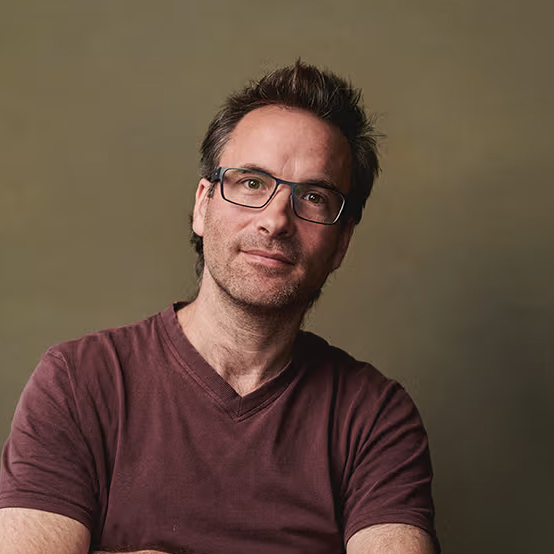
Maxim is Co-Founder of Terasor and a UK based documentary and portrait photographer. He flies a DJI Mini 4 Pro and writes about UK drone regulations, the wider industry, and the platform from a working photographer's point of view.
LinkedIn