Inspection
Solar Panel Inspection Drone Pilots
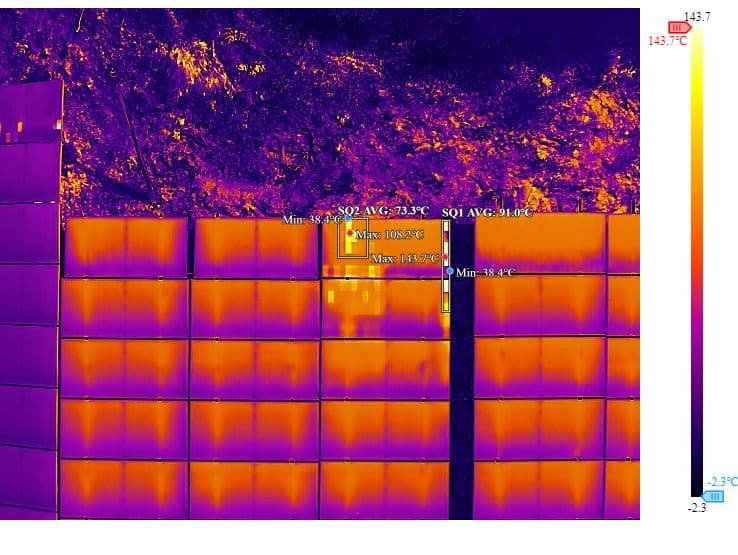
A solar inspection flies an array and records each module, usually with a visible light camera and a thermal camera together. Heat is how an electrical fault shows itself from the air, so the array is inspected while it is generating. The output locates the modules to look at; the electrical diagnosis is separate work.
What this service involves
A solar panel inspection flies an array and records each module, normally with two cameras. A visible light camera shows physical condition: cracked glass, delamination, soiling, shading and mounting damage. A thermal camera shows where a module or a cell is running hotter than its neighbours, which is how electrical faults reveal themselves from the air.
The physics is the same as any other thermal work. A camera reads surface temperature, so what it detects is heat, and heat on a panel is a symptom. A hot cell, a hot string or a hot junction box each point at a different underlying fault, and the survey locates them rather than diagnosing them.
Who hires drone pilots for this, and why
- Owners and operators of ground mounted arrays, for whom a module producing nothing is revenue lost every sunny day until somebody finds it.
- Operations and maintenance contractors working to a scheduled inspection cycle, where the same array is flown at intervals and compared against the last visit.
- Asset managers and lenders at acquisition or refinancing, who want the condition of the array evidenced rather than asserted.
- Commercial roof owners with rooftop arrays, where walking the array to inspect it means working at height on a fragile surface.
What to expect on the day
Conditions matter more here than on most jobs, because the thermal signal depends on the panels working. An array needs good irradiance to show faults, so inspections are flown in clear conditions around the middle of the day, and an overcast morning is a wasted visit rather than a slightly worse one.
Deliverables are normally a fault list located to individual modules, with the thermal and visible imagery behind each finding, and a plan of the array showing where they are. Expect the output to say which modules to look at and in what order, and expect the electrical diagnosis and the repair to be separate work.
Solar Panel Inspection: frequently asked questions
Why does the weather matter so much for a thermal inspection?
A thermal camera detects temperature difference, and a panel only runs warm when it is generating. Under thick cloud the whole array sits close to ambient and a faulty module looks like a working one, so the survey is flown when irradiance is high enough for faults to stand out.
Does the array have to be shut down?
No, and it should not be. The array needs to be generating for the thermal survey to show anything, so it is inspected in normal operation.
Can it tell me why a module is faulty?
It tells you which module is hot and what the heat pattern looks like, which narrows the cause considerably. Confirming it is an electrical test at the module or string, and that is a separate instruction to somebody qualified to carry it out.


Other drone services
Aerial PhotographyReal Estate PhotographyProperty Flythrough360 Video & PhotographyAerial VideographyFPV (First Person View)Roof InspectionBridge InspectionFacade SurveyThermal ImagingInfrastructure & Utilities InspectionLand SurveyTopographical SurveyVolumetric SurveyPhotogrammetryRoad SurveyLiDAR SurveyAgricultural SurveyCoastal SurveyEstate SurveyConstruction MonitoringEvent CoverageWedding VideographyFilm & TV ProductionCinematographyLive StreamingTourism & TravelStock Footage
Browse the full drone pilot directory or explore drone services by location.